

The nationwide voter registration by the Independent Electoral and Boundaries Commission kicks off on on Monday, September 29, ahead of the November 27 by-elections and the August 2027 General Elections.
The commission has revealed that, as the Continuous Voter Registration (CVR) continues it is seeking to register 6.3 million new voters who have successfully applied for their IDs in the past few years.
After the launch, which will commence in all 290 constituencies, the CVR will be followed up by a comprehensive registration exercise that will bring the services to the wards.
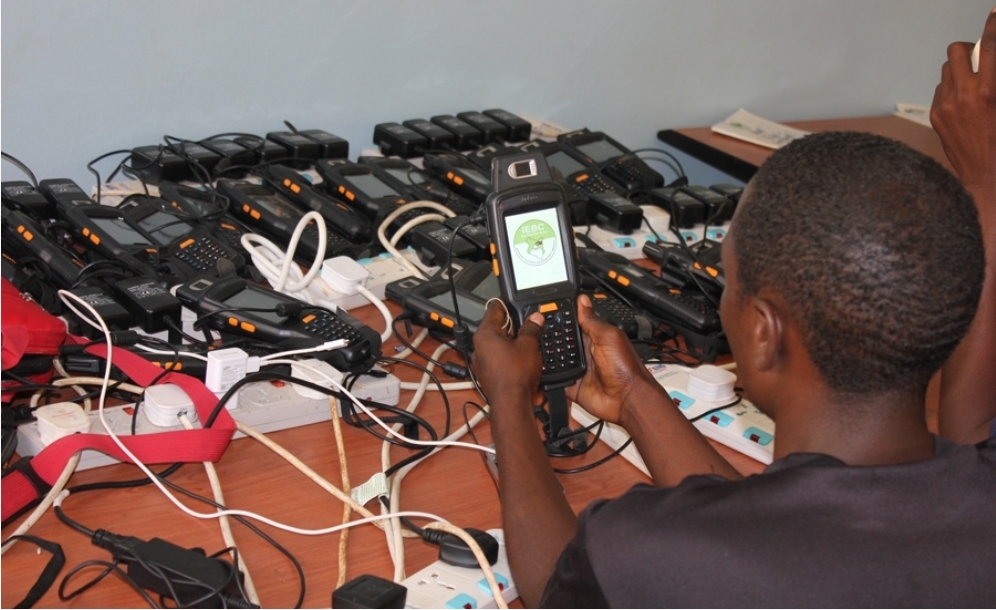
Among these changes are that the personal identifying details will be automatically scanned from the ID cards and that iris data will be collected alongside fingerprints and passport photos.
Speaking at Citizen TV ahead of the launch, IEBC commissioner Alutalala Mukhwana relayed that the commission would be implementing several changes to streamline the process and foster transparency.
Most of the changes recorded will be in the registration process to avoid duplication of voters and misspelling of names and crucial personal details. As such, the registration process will be conducted as follows:
The Process Of Registration
At any registration centre, the first thing you will be required to do is to hand over your ID card to the IEBC officer to confirm that you are the holder of the card.
The IEBC official will then scan the ID card on the registration kit to verify whether you are a registered voter. If registered, the details will pop up, but if not, you will proceed to registration.
The IEBC returning officer will then scan your ID once again to automatically capture the details stated on your ID card, including the ID number, serial number, gender, date of birth and the rest. This will eliminate any human errors that might occur when manually typing the details onto the kit.
Then, the officer will capture your literacy levels, including whether you can read or have a disability or special needs that require assistance during the voting process.
You will then be required to input pre-selected polling stations and wards where you plan to cast your vote.
Lastly, you will move to the identifiers section, which will include capturing your fingerprints, your passport photograph, and, for the first time ever, your iris data.
The whole process is expected to take a maximum of 10 minutes. Younger, tech-savvy people and more literate individuals are expected to finish the process in about five minutes.
Registration Centres
The commission has also made several changes that will enable more Kenyans to register at their convenience, this move, aiming at enabling the commission to reach a ballpark of 6.3 million new voters before 2027.
One such change is that you do not have to register at the polling station or constituency where you intend to cast your vote. For instance, if you work in Nairobi but you intend to vote upcountry, you can register to vote at a registration centre near you, and you can then select a different polling station where you plan to vote.
To accommodate this, the commission will have four registration kits per constituency instead of the usual one or two.
The first two will ensure no long queues that might discourage prospective voters, while the third one will be the open kit for those registering to vote in a different centre.
The last one, Alutalala said, has been designed to entice the younger generation to register as voters, stating that the IEBC chair, Erastus Ethekon, would soon reveal details on it.
“We have another innovation that is coming up, but I am not allowed to talk about it because it is yet to come, but it is so Gen-Z friendly, and God-willing, the chairman will be pronouncing himself on this,” he stated.
Additionally, Kenyans will be able to register as voters in Huduma Centres across the country, where IEBC officials will be present to ensure as many voters as possible have been registered. The service will be available in a week’s time.


