
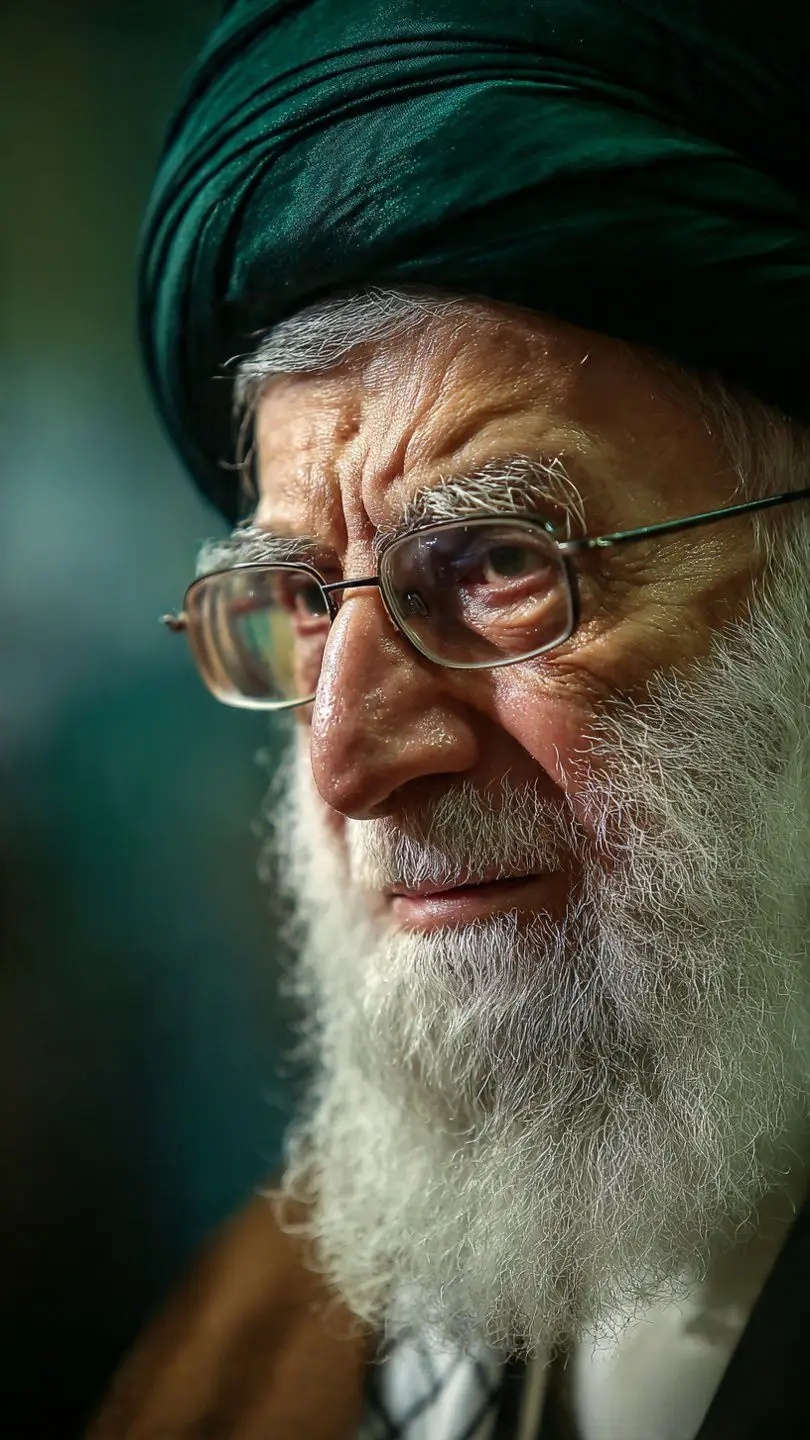
Israel and USA, on 28th February, jointly launched surprise attacks on Iran, instantly killing their main target, the former Supreme Leader, Ayatollah Ali Khamenei.
F-16s worked with F-35s, F-15s, Israeli intelligence, and others to achieve the historic move.
Assassinating Ayatollah Ali Khamenei and nearly all of Iran’s top military and Islamic Revolutionary Guard Corps officers on the first day of the war was an incredible turning point in which all of the IDF’s air and intelligence power combined to change the course of history, an IDF senior officer told The Jerusalem Post on Wednesday.
“Assassinating the supreme leader and all of the top echelon of the Iranian military and the IRGC in around half a minute was made possible by a giant and incredibly coordinated airstrike, which took months of planning,” the senior officer said.
40 Seconds Operation
In 40 seconds at around 8:15 a.m. on February 28, Khamenei, IRGC commander Mohammad Pakpour, military commander Abdolrahim Mousavi, defense minister Amir Nasirzadeh, National Defense Council secretary Ali Shamkhani, another top security aide to Khamenei for over a decade, and about 35 other top officials were killed.
Among the Israeli aircraft involved were F-16s, F-35s, and F-15s, although there were many others, including the US military’s involvement.
According to the IDF, the airpower and munitions used during the first day of attacks – both in those assassinations and in wider attacks on Iran’s air defenses and ballistic-missile apparatus – were unprecedented and far beyond any prior similar power used by Israel.
“With around 200 aircraft all carrying precision munitions and all flying 1,000 to 1,500 kilometers to strike hundreds of targets all in a short time period, the effect was to completely throw the Iranians off their game,” the senior officer said.
“The total surprise we achieved was extremely deadly and effective.”
When adding in the contribution and profoundly close cooperation with the US military, some in the IDF view the assault and the current war as the most devastating short-term air war in history.
The F-16s were flown back and forth to Iran in the early days of the war, essentially nonstop, and took an enormous part in the most critical missions.
By March 5, almost every aircraft had flown nine to 10 sorties back and forth to Iran, with each flight taking five to eight hours round-trip.
While the pace of the F-16s and other aircraft has remained frenetic, one change was that after the first couple of days, the IAF had achieved air supremacy.
That allowed stand-in attacks in which Israeli aerial assets could strike from short range, with some even hovering over their targetsIDF, US military able to switch munitions once air supremacy achievedOnce this air supremacy was achieved, the Israeli and American militaries were able to switch over to less expensive munitions, such as Joint Direct Attack Munitions (JDAMS), something that the Pentagon discussed publicly to push back against critics’ concerns about the cost.
Nevertheless, every flight is a challenge for the red-eyed pilots, some of whom are taking caffeine pills to enhance their situational awareness, and all of whom are being forced to take a certain number of hours of rest per day despite their enthusiasm and elevated adrenaline levels.
Part of that enthusiasm comes from the standard commitment to battle.
But it has been augmented greatly by the pilots’ understanding that every time they close their cockpit and fly off to attack Iranian missile launchers, they are directly protecting their friends and family on the home front, who otherwise would come under more Iranian missile fire.
Besides the pilots, there is also a massive operation for maintaining the F-16s and other aircraft during their marathon mission.
A large part of the maintenance team at Ramat David Airbase for F-16s in the North comes from the relatively new haredi (ultra-Orthodox) track for IAF engineers.
In January 2025, the Defense Ministry announced an $80 million purchase of more advanced self-protection systems for its fourth-generation F-16 fighter aircraft just as top Israeli and IDF officers were intensifying discussions about striking Iran’s nuclear program.
Purchased in the early 2000s, the F-16s were meant to be an upgrade from the F-15s purchased decades earlier.
Public information indicates that Israel purchased more than 100 F-16s. By the mid-2010s, however, the F-35 became the most advanced aircraft in the fleet, relegating the F-16s to Israel’s second-best aircraft.
Spending $80m to update the F-16 systems was a major commitment to keeping the jets a significant part of Israel’s long-range attack capabilities, even as Israel has been investing large sums of money into more F-35s and upgraded F-15s of the F-15-EX model.
Neither the IDF nor the IAF have unlimited funds, and a decision to invest $80m in an aircraft model created 40 years ago, with Israel’s specific models purchased 25 years ago, means channeling funds in that direction as opposed to other also important priorities.